AI Governance Accountability Structures and Role Design
Accountability must attach to each pipeline node, not just final approval.
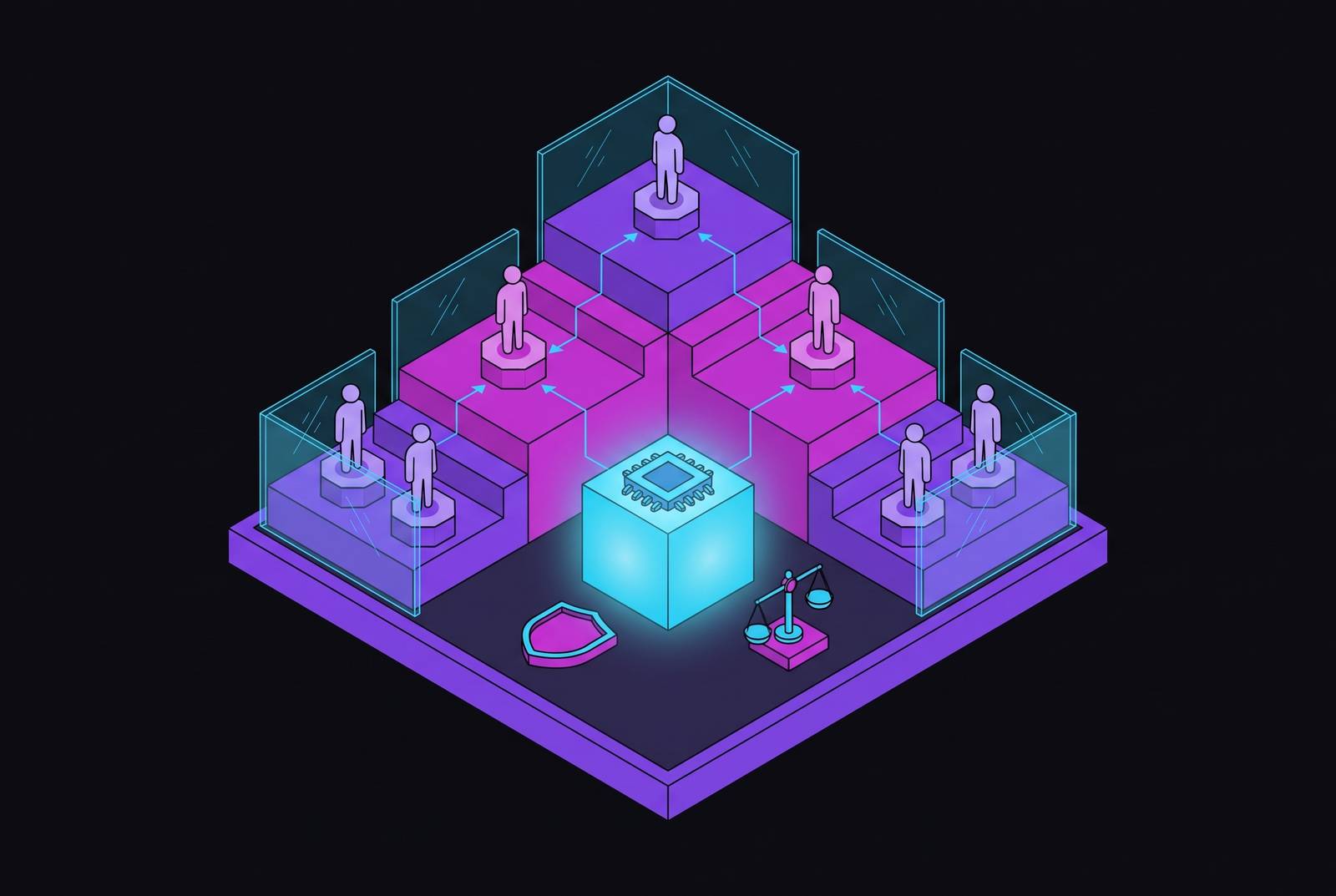
AI governance accountability structures must follow the architecture of deployment. In multi-model content pipelines, effective role design assigns ownership to model selection, generation, review, and compliance verification. Accountability at final approval is insufficient because the decisions and evidence needed to govern an output arise throughout the pipeline.
Why traditional governance role design fails in AI pipelines
Conventional AI governance divides responsibility by organizational function. The CISO is responsible for security risk, legal for contracting, and compliance for regulatory classification, while HR writes the acceptable-use policy. Those assignments are reasonable within their respective disciplines. The problem arises when they are treated as a complete accountability structure for an AI system whose output depends on decisions across those boundaries. Each function owns a slice, but none necessarily owns the outcome.
The role design assumes a system with a single point of control, involving one vendor, one model, and one output. Under that architecture, functional responsibilities can converge on a clearly bounded deployment decision. A pipeline that selects among models, transforms their outputs, and passes content through separate review tools has no equivalent single control point. Choices made upstream can change the properties that teams downstream are expected to check.
The consequences follow from that separation of authority. Policies may be written without anyone owning their enforcement across the pipeline, while risk assessments remain confined to individual functions. No single authority may be able to approve or block deployment. Assigning another final approver does not resolve the missing ownership of earlier decisions. The governance structure must distinguish authority over the deployment as a whole from responsibility for the nodes that determine its behavior.
How multi-model orchestration changed the architecture that governance must cover
Multi-model orchestration is now the usual way enterprises work. Enterprises run several models in production at the same time, routing tasks based on the type of task, its cost, and the compliance requirements it must meet. Model selection is therefore not simply a procurement event before deployment. It is also part of the operating architecture, determining which model handles a particular task before an output reaches review. Different routes can lead to the same publication stage.
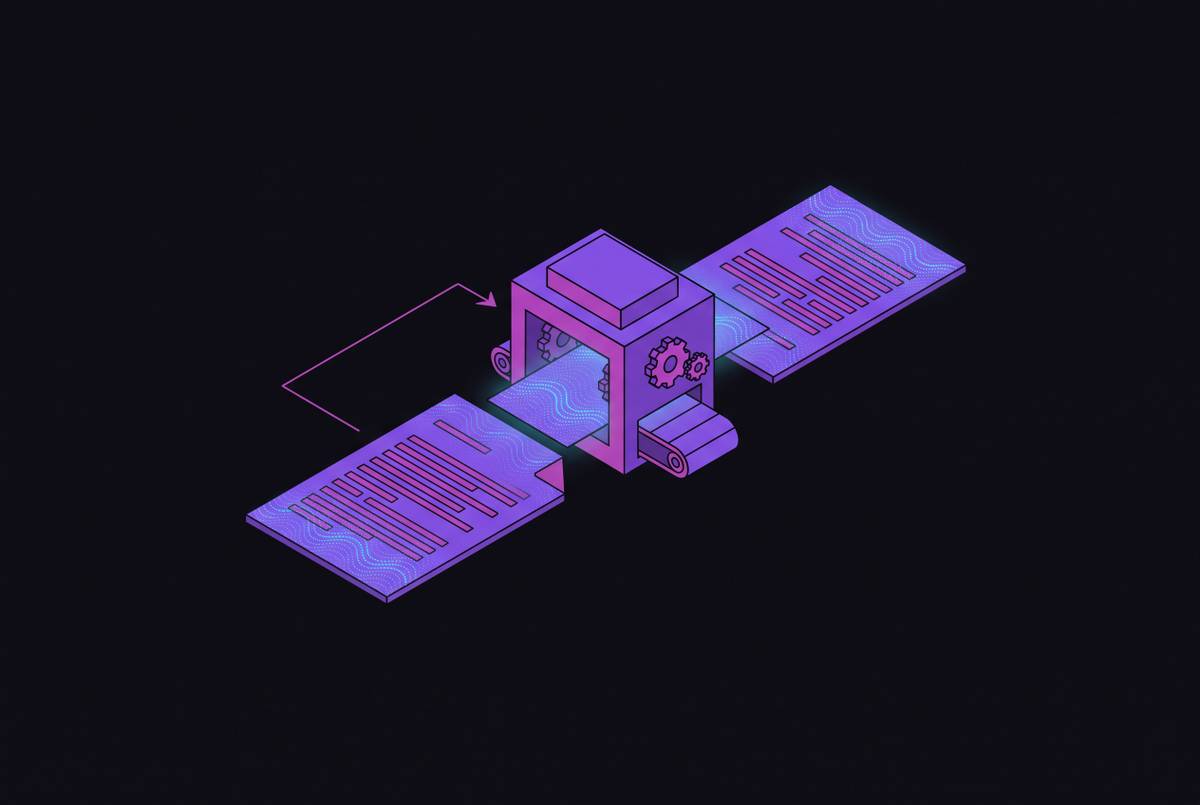
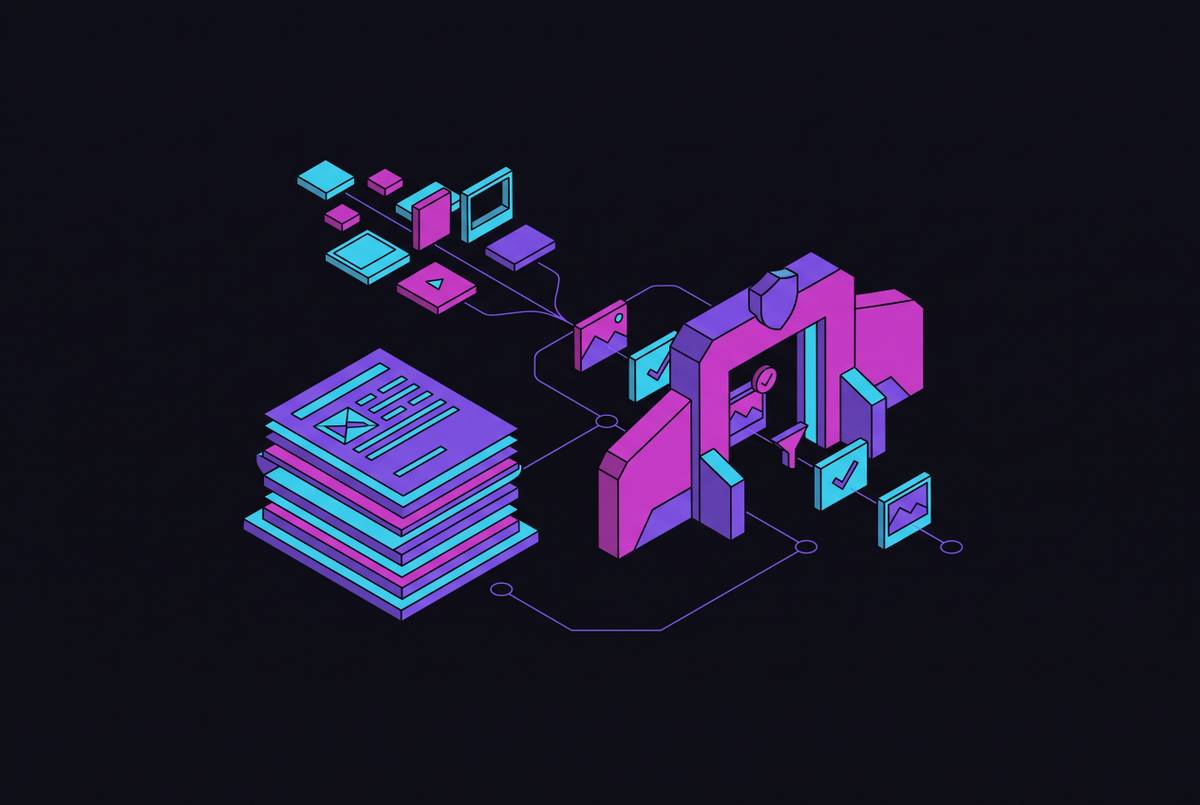
A content pipeline can consequently contain separate nodes for model selection, output generation, editing, review, and final verification. The routing decision precedes generation, while editing may transform what generation produced. Review then assesses content that has already passed through those earlier stages. The final artifact’s history includes the models, configurations, and transformations that contributed to it.
The surrounding architecture also includes identity, permissions, tools, memory, orchestration, delegation, and autonomy. These components determine more than the wording of an answer. They shape what a system can access, which tools it can use, and how work moves between components. In agentic systems, that movement extends to actions taken on a user's behalf rather than responses to a human-written prompt alone. The deployment has distinct parts for access, the actions the system is allowed to take, and action logging.
What accountability must cover at each node in an AI content pipeline
Model selection establishes the first ownership question. Someone must decide which model handles which task, define the criteria for that choice, and document the decision. Provenance begins at this point because the selected model becomes part of the explanation of how the output was produced. An owner responsible only for the finished content cannot supply an undocumented routing decision after the fact. Selection accountability therefore concerns both the decision and its record.
Generation introduces properties that are not visible in ordinary review. KGW-family watermarks, for example, embed a statistical signal at the token level while text is generated. A secret key and token context select a green vocabulary subset, and a positive logit bias favors that subset. The signal precedes any human reading of the draft. Responsibility for generation must therefore cover not only what the model says but also the watermark, fingerprint, and provenance properties associated with its output.
Review has a different scope of responsibility from generation. Its owner reads, edits, and approves content, but meaningful oversight also depends on visibility into where that content came from. Records including the model version, prompt, and review timestamp support error tracing and accountability. If those details are not captured, later approval cannot reconstruct them. Content approval and provenance capture are related responsibilities, but they are not interchangeable.
Compliance verification then assesses the output as published or deployed. That task is distinct from editorial review because it includes properties that a reviewer may not be equipped to inspect. Verification relies on evidence from earlier nodes. Its owner can assess that evidence, but cannot compensate for its absence through a more careful reading of the final text.
Why watermark and fingerprint properties make the generation node a distinct governance responsibility
KGW watermark detection accumulates green-token evidence across a document and computes a z-score over the full token sequence. A reviewer reading for accuracy or style cannot see that signal. Nor can the reviewer establish its status by reading alone. This makes watermark configuration a generation responsibility rather than an editorial check that can be added at approval. The statistical properties of an output require a different form of oversight from its meaning.
A study of text watermarks found that watermarking can cause drops of 10–20% in classification tasks in the average case. Generation choices therefore affect utility as well as provenance. Fingerprinting serves a complementary attribution function, identifying which model produced an output without embedding a deliberate signal. Stable fingerprints can support reliable model attribution. The choice of model consequently affects both the content produced and the evidence available to attribute it.
Provenance can also break after generation has completed correctly. C2PA manifests have been stripped on re-save in certain enterprise workflows when tools that are not C2PA-aware re-save or re-encode files. That failure belongs to the transformation step, whether it is automated or human-operated. It does not necessarily originate with the model. Generation ownership must therefore connect to ownership of the stages through which provenance passes.
A Unified Attack Framework against Statistical Generative Watermarks for Large Language Models finds that score-ratio alignment is a weakness in the structure of all the watermark families it covers, including KGW variants. That finding limits what watermark presence alone can establish. A framework that treats the signal as sufficient proof of provenance is brittle unless generation integrity is independently verified. Governance must establish who controls the conditions under which a mark is produced and preserved.
How to map accountability roles to pipeline nodes in practice
The practical response is a role-allocation framework adapted to the actual pipeline. It distinguishes who performs the work, who is accountable for the decision, and who must be consulted or informed. Each node needs a named owner with responsibilities matched to its controls. Departmental convention is not enough. The mapping must reflect who can change routing, configure generation, approve content, and verify the resulting evidence.
At board level, ownership begins with AI risk appetite. Those boundaries guide the decisions made throughout the pipeline. The Chief AI Officer or AI Governance Lead owns the program, reports to the board, and is accountable for documenting a named owner at every node. The Chief Risk Officer keeps the AI risk register up to date with entries for each node as well as for the system as a whole. Together, these roles connect deployment authority to the specific decisions that create risk.
The CISO owns AI security controls, including generation integrity, watermark-key protection, and provenance infrastructure. Data Science or ML Engineering implements model routing, watermark configuration, and provenance metadata capture at selection and generation. Legal or Compliance takes the lead on regulatory classification and is responsible for compliance verification. Under EU AI Act Article 50(2), providers of AI systems have the machine-readable marking duty, deployers are exempt from that duty, and synthetic media falls within its scope whether or not it is used for marketing. ISO/IEC 42001 addresses traceability through data governance, lifecycle controls, transparency, and performance evaluation, while prompt logging serves as an implementation practice without being a verbatim prompt-level requirement.
Business Unit Leaders own deployment purpose and accountability for how outputs are used. Review ownership must also be explicit. End users report AI incidents and are the last line of detection for failures that upstream controls miss. For content-generating agentic systems, the framework must match the three human oversight tiers to the decisions at each node, with oversight that varies by step.
Where role gaps appear most often in multi-model content pipelines
Configuration handoff failure appears between model selection and generation. It occurs when the team choosing models does not share configuration documentation with the team governing outputs. The team in charge of oversight then lacks the information it needs to check generation's compliance properties. Ownership on both sides is not sufficient. The handoff itself must connect the selection record to the controls applied during generation.
Provenance-blind review appears at the next boundary. Reviewers may receive a draft without knowing which model produced it, under which configuration, or with which embedded signals. They can judge quality but not provenance. The C2PA re-save failure makes this distinction concrete because an editing step can break the compliance record without making the content visibly defective. Responsibility for that transformation cannot remain implicit between the generation and review teams.
Approval without an audit trail creates a further gap between review and compliance verification. A recorded approval establishes that someone accepted the content, but not necessarily how it was produced. Without provenance data, verification has no corresponding history to present to a regulator. Article 50 marking obligations, where they apply, and ISO/IEC 42001 traceability controls both call for attention to evidence, though the duties they impose differ. Treating editorial acceptance as compliance evidence obscures that difference.
Two additional gaps extend beyond individual handoffs. Agent-initiated actions can fall outside roles defined only around human-written prompts, leaving access and action oversight unassigned. Cross-model voice consistency can also lack an owner. Each model may complete its assigned task while the combined document remains incoherent. That is a pipeline-level quality failure, even when no individual node has failed its defined task.
Why architectural diversity in the pipeline is itself a governance advantage
The same architectural diversity that complicates accountability can support stronger governance. A single model leaves a repeatable statistical signature throughout its output, and KGW evidence accumulates across the full token sequence. Multi-model authorship distributes the provenance risk concentrated in that one signature. Diversity alone does not establish compliance, however. Its advantage depends on documented ownership of the contributions and transformations that make up the final artifact.
Research on KGW evasion shows why editing later is a poor substitute for designing the architecture with care. Under a strict token-edit budget, even a well-constructed phrase-replacement strategy achieves terminal evasion only in a minority of cases. The reduction arises mainly from removing watermark-enriched source events, without a quality-preserving rewrite. Post-hoc changes therefore provide a poor foundation for provenance assurance. The governance objective remains an accountable production history.
With named owners and documented configurations, model selection, routing, blending, and review become auditable steps. The organization can explain how content was produced as well as what it published. A judge-panel approach can select the best output line by line across model kernels, followed by a final enhance pass to produce a unified voice. No single model needs to author the entire document.
The compliance and quality arguments meet at that point. Node-level accountability makes diverse contributions governable, while pipeline-level review addresses the coherence of the assembled result. It also provides a basis for the output verification supported by ISO/IEC 42001 traceability. Multi-model orchestration becomes an affirmative governance choice when its ownership structure is as explicit as its routing structure.