Voice Consistency Across Outputs From Multiple LLMs
How multi-model pipelines create stylistic inconsistency across handoffs.
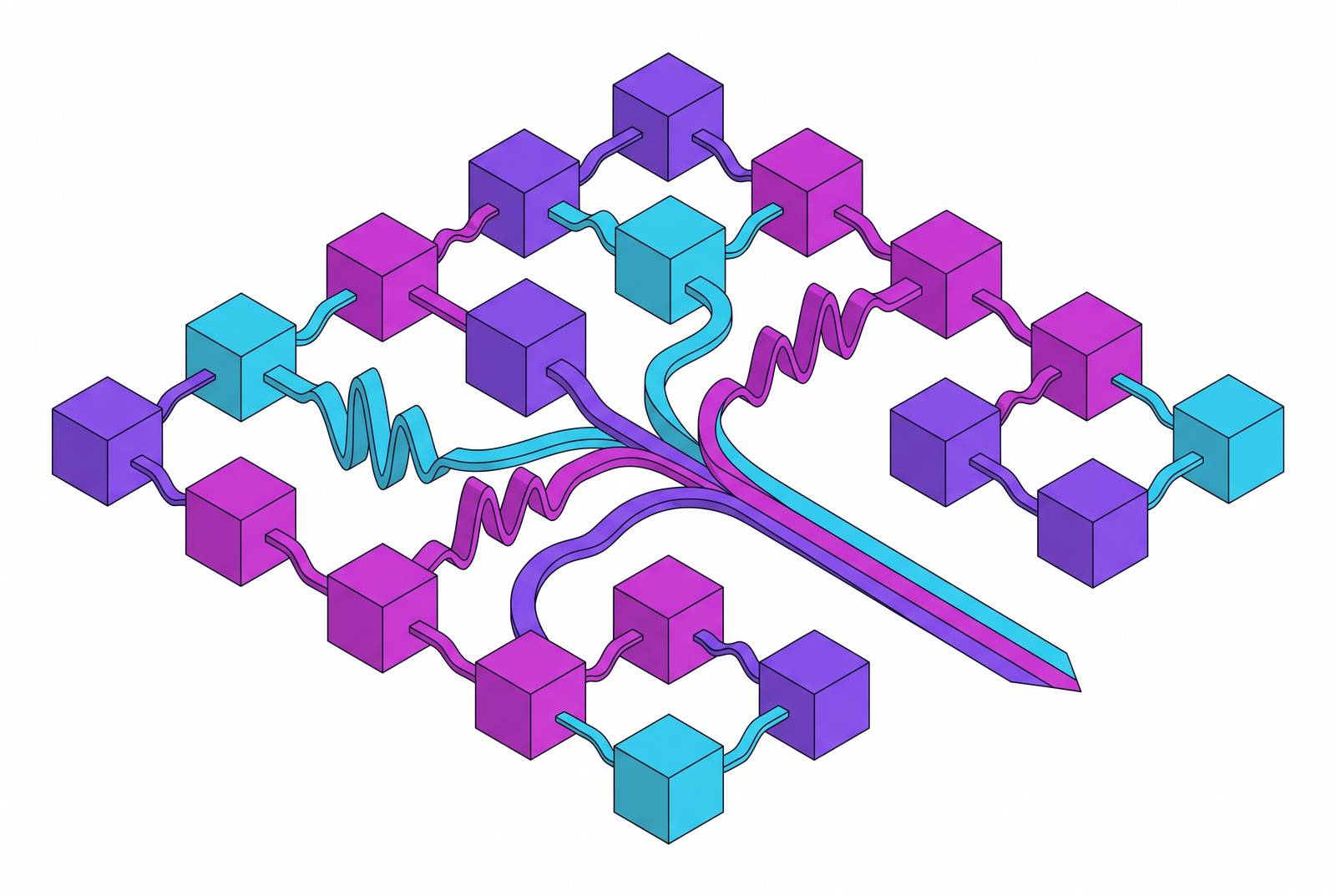
Voice consistency across outputs from multiple LLMs is an engineering and process challenge. Multi-model pipelines improve cost, latency, and output quality, but their handoffs also introduce competing stylistic defaults. A unified voice requires structural control over selection and revision, while provenance needs a record of the multi-model process rather than dependence on one model’s surviving token signature.
Why multi-model pipelines are now standard, and what that creates for voice
Enterprise content operations have moved from single-model workflows to orchestrated pipelines because different tasks benefit from different capabilities. A simple extraction query can go to a fast, inexpensive model, while a complex strategic passage goes to a high-capability reasoning engine. The routing decision serves the task first. It does not, by itself, provide a mechanism for making every resulting passage sound like part of the same document.
Models such as GPT-5.2 and Claude Sonnet 4.5 illustrate the choices available across drafting, polishing, and editing stages. Each brings its own stylistic defaults to the text it generates. Those defaults meet at every prose-producing handoff. When a brief passes through two or three models, the pipeline must reconcile their choices about rhythm, register, and emphasis as well as their substantive contributions. Divergence is therefore a structural condition of the workflow.
What voice drift actually looks like across model handoffs
Cross-model voice drift appears in observable features, including tone consistency, brand voice alignment, long-form coherence, and sentence-level naturalness. A passage can remain accurate while becoming stylistically disconnected from the section before it. The seam may be immediately apparent to readers. For example, a section written with analytical flatness may lead into ornate prose, changing the document’s apparent stance even though the subject remains the same. The disruption can arise in the relationship between passages even when each passage works well on its own.
The Mazur Writing Benchmark assesses dimensions relevant to that distinction. Its current comparison scale gives GPT-5.2 a score of 1.0, ranked 11th overall, while Claude Sonnet 4.5 has no published score on the benchmark. That absence limits the comparison. Even a benchmark that measures how well each model writes cannot show whether sections written one after another by different models will share a voice.
Style Amnesia provides a related finding within a single model. The research finds that a Spoken Language Model can lose speaking-style consistency across multi-turn interactions, including consistency in emotion, accent, volume, and speed. This is an analogue. It still shows that following an established thread does not ensure that the style will stay the same. In the GPT-Newspaper pattern, a Search Agent, Curator Agent, Writer Agent, Critique Agent, Designer Agent, and Editor Agent handle discrete stages and can use different underlying models. That design creates repeated handoff points, with the clearest risk to voice arising where agents draft or revise prose.
Why prompting conventions alone cannot close the gap
A style guide, tone description, or persona brief gives each model a common instruction, but it does not make their generation processes identical. The models still draw their text from distributions shaped by their training. Prompts influence those distributions without erasing their differences. Consequently, agreement on “formal” or “concise” can coexist with different sentence rhythms, qualifications, and choices of emphasis. The instruction establishes a target, while the model determines how that target becomes language.
Sophisticated prompting can narrow this gap through few-shot exemplars, style anchoring, and constitutional prompting. These methods are not irrelevant to voice. Their limit is that a shared instruction does not guarantee shared behaviour across the full output, especially when successive models revise one another’s work. A prompt can make a passage better without making it fit the passages around it.
KGW watermarking operates through decoding mechanisms, although a watermark is not the same thing as a model’s native style. KGW partitions the vocabulary into context-dependent preferred and disfavoured token sets, then applies a fixed delta to logits during decoding. That bias is an explicit generation mechanism. A request to change tone does not itself remove the configured watermarking operation. KGW’s delta-versus-quality trade-off also shows that a statistical signal can exist below the point where its effects become conspicuous in prose, while stronger configurations can degrade quality and naturalness.
Invisible Entropy explains a further constraint in low-entropy settings, where the next token is highly predictable. Its research finds that favouring green-list tokens in those settings can make text flow less naturally. That watermarking finding shows how token-level intervention and readable style are interdependent. With no standardised metric for cross-model voice consistency in wide use, teams also have no shared way to tell whether their prompting conventions have closed the gap or just made it harder to notice.
How watermark mechanics explain why multi-model pipelines naturally dissolve single-model signatures
When a second model rewrites the first model’s prose, it can preserve meaning while replacing the wording that expressed it. That distinction links difficulty maintaining a consistent voice to watermark fragility, because both depend in part on which tokens survive revision. A polished passage may keep its argument while taking on a different rhythm and losing a statistical pattern built into it when it was first generated.
The July 2026 forensic readiness paper reports that, across 846 valid paraphrase runs, every initially detected KGW and Unigram watermarked text lost its detectable watermark after paraphrasing. Its result was 100% conditional removal, with semantic content preserved. The condition is essential to interpreting the figure. It covers only texts whose watermarks were detected at the start of those runs, so it cannot guarantee that every rewrite defeats every watermark. Keeping the meaning alone also does not settle how a court would classify a given transformation.
KGW detection looks for an unusually high fraction of green-list tokens under the watermark’s partition. When another model replaces those tokens, the excess can shrink until the z-score falls below the detection threshold. The detector then loses its basis for attribution. The voice can change through the same replacement process, although stylistic coherence and watermark detectability remain different measurements. A rewrite that weakens a watermark is not necessarily a rewrite that improves the document.
Can LLM Watermarks Robustly Prevent Unauthorized Knowledge Distillation? examines the related problem of watermark inheritance, including removal through paraphrasing and inference-time neutralisation. The research supports treating watermark survival as a vulnerability rather than an assured property of model-to-model transformation. The forensic paper also reports a majority false-negative rate for KGW on pristine, unattacked text in its evaluation. Even the initial signal was not dependable there.
What architectural approaches actually produce a consistent voice across models
In a sequential handoff, model A supplies a draft and model B revises it, leaving the final voice dependent on what B changes and what it preserves. Local improvement can leave the seams intact. A structural arbiter instead evaluates competing outputs before the pipeline commits to the wording of the assembled document. This separates the choice of content from the assumption that one model’s complete draft should become the foundation.
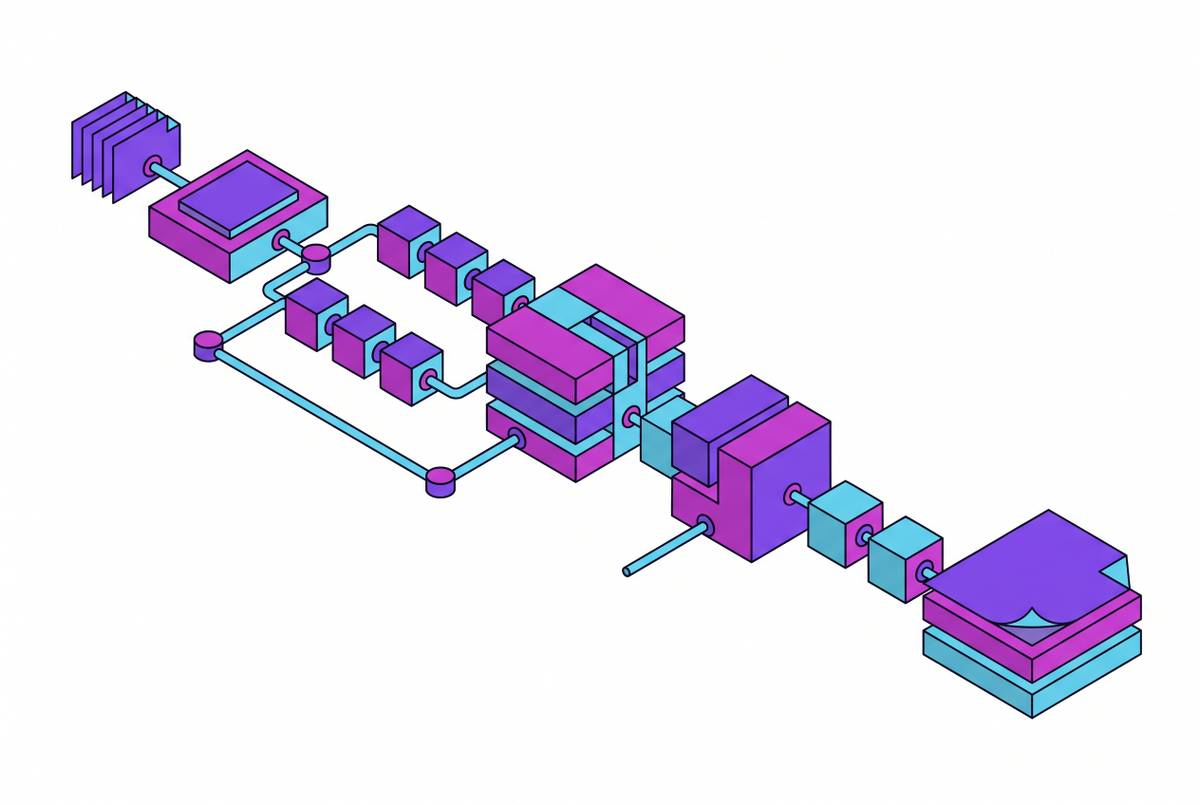
The judge-panel-plus-enhance-pass pattern implements that separation through parallel model kernels, granular selection, and a final unification pass. Multiple models draft candidate material, and a judge panel selects lines or segments. The final pass then joins the chosen material into prose that flows, smoothing out differences between segments that each work well on their own. The architectural benefit comes from assigning distinct functions to generation, selection, and coherence.
A panel can choose the strongest sentence in each position and still assemble a document with conflicting rhythms or registers. The unification pass addresses their relationships, rather than simply repeating the task of choosing the best isolated contribution. The Style Amnesia finding reinforces the need for explicit continuity control, although its spoken-interaction setting does not establish the effectiveness of any particular text-unification method.
CrewAI is relevant as an agent-orchestration framework in which these responsibilities can be assigned. The design must set where selection and unification happen in the workflow and whether they apply to the whole output. A framework name supplies no quality guarantee. Compared with serial revision, the parallel pattern makes the competing contributions available to an explicit arbiter, while retaining the task-specific model choices that made the multi-model pipeline useful.
The Coalition for Content Provenance and Authenticity standard adds a layer of provenance through cryptographic Content Credentials. C2PA can attach provenance metadata to the whole document to record multi-model authorship even if each contributor’s token-level signature can no longer be detected. In the resulting architecture, the unification pass governs the reader’s experience, while the provenance record documents the process behind the text. Neither function substitutes for the other, and neither should be inferred merely from the presence of a judge panel.
Why voice consistency and watermark dispersal are the same problem with the same solution
Voice drift and watermark dispersal share a structural cause, because model-to-model transformation changes the tokens through which both style and statistical signatures are expressed. They are not, however, identical tests of an output. A document can be stylistically unified without proving anything about its watermark status. Equally, a watermark can disappear from prose that remains awkward or inconsistent. Both require deciding what must remain stable across transformations and providing a mechanism that preserves it.
For voice, that stable property is coherence across the assembled document, enforced through selection and a final unification pass. For provenance, it is a documented account of the multi-model process, preserved separately from the wording that editing changes. The two goals require different forms of continuity. Mixed authorship can weaken a detector’s expected green-token excess, but it does not justify a universal claim that the result is structurally undetectable. The evidence supports moving provenance beyond dependence on that signal.
The strongest objection is that dispersing authorship makes attribution harder precisely when accountability becomes more important. That is true if attribution depends only on recovering a single model’s signature from the final prose. Document-level provenance changes the basis of the evidence. C2PA can record the multi-model process that a token-level test cannot reconstruct reliably after meaning-preserving revision, although that record is not by itself a guarantee of regulatory compliance.