Handoff Protocols Between AI Drafting Systems and Human Editors
Editors need production logs to verify which AI systems created each passage.
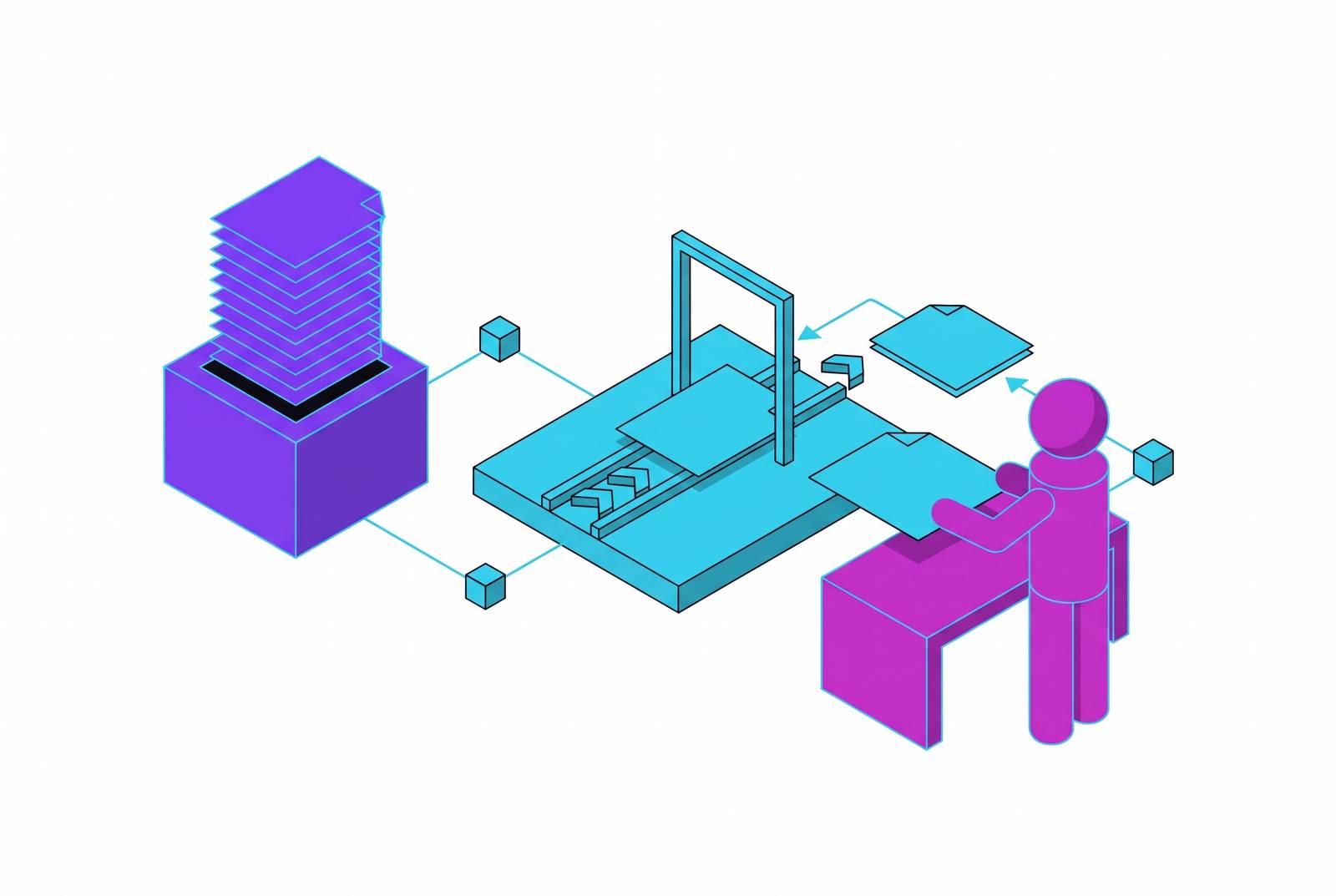
Handoffs between AI drafting systems and human editors must preserve more than the text. In multi-model pipelines, the transition needs to record model contributions, expose voice divergence, and identify where human judgment is required. Making that transition a set checkpoint for the editor protects the evidence and context that routine edits can remove.
Why the editorial handoff has become a structural problem, not a workflow detail
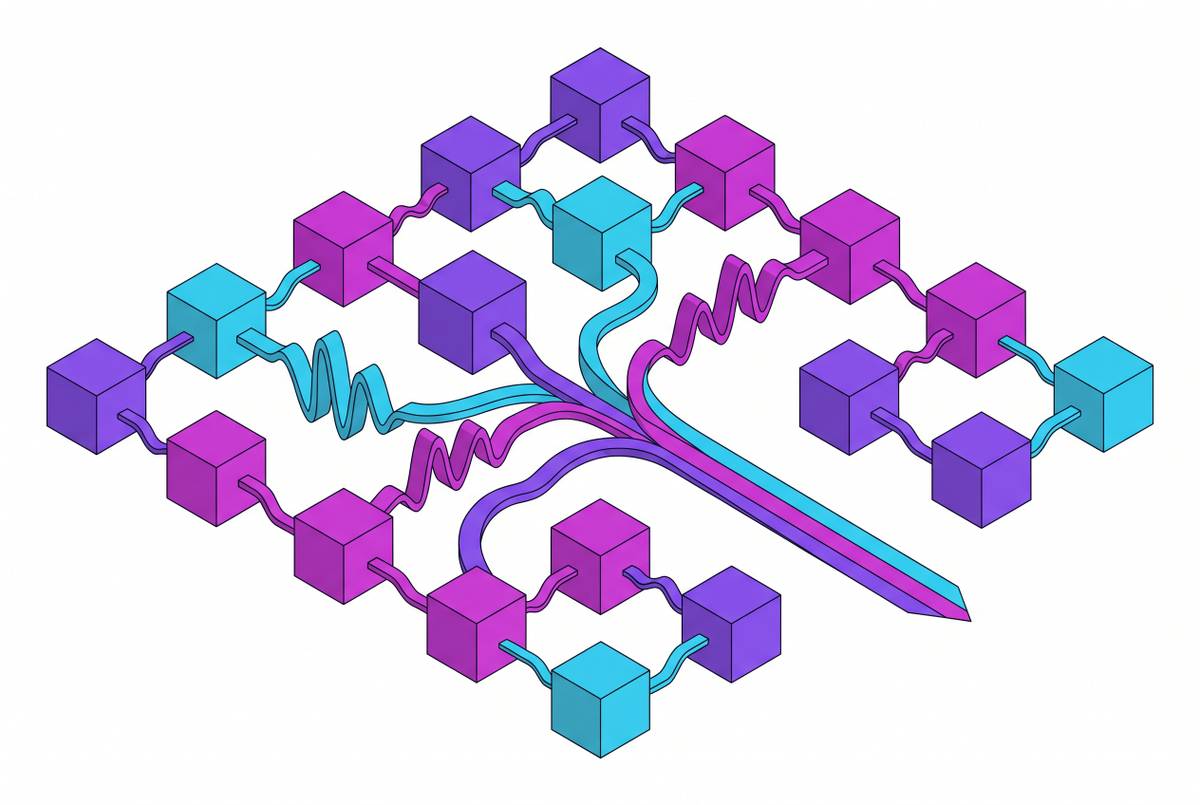
An editor receives an article that reads fluently but was produced under several different sets of constraints. One task may have been routed for cost, another for latency, and another for compliance. Enterprises now run multiple models at once, so this way of splitting the work is now a normal part of production. The finished draft conceals much of that history. Without a record of those decisions, the editor sees the combined output but not the conditions that shaped each part.
The draft is a composite of systems with different stylistic tendencies and failure modes. With Mixture-of-experts architectures, the way text is generated can also vary within a model. Total parameter counts are often above one trillion, while active parameters per forward pass stay in the tens of billions. Different model slices can have different token-level tendencies, though these come from within a model and differ from those that come from routing work between models.
An informal handoff leaves these distinctions outside the review. The editor can reconcile awkward transitions and uneven language, but the prose alone does not explain which system produced a passage or whether that system was appropriate for the task. That gap extends beyond writing quality. It separates the editorial decision from the production evidence needed to support it.
What each model in the pipeline leaves behind, and why editors need to know
Kirchenbauer et al. introduced the KGW watermarking scheme, which partitions a vocabulary into green and red token sets and applies a logit bias toward green tokens during generation. In practical terms, the model becomes more likely to choose an eligible green token when generating its next piece of text. Over a passage, those choices make up a statistical pattern. A detector uses a z-score to assess that pattern as evidence of watermarked generation.
A stylistic fingerprint is related but not identical. Training data, architecture, and sampling behavior produce repeatable tendencies in token sequences even without deliberate watermarking. Those tendencies can remain after light edits and help explain why models differ in their rhythms and the words they choose. They are not a substitute for a production log. Patterns that can be detected and records of authorship answer different questions, especially when several systems have worked on the same passage.
The EMNLP 2025 study on token partitioning guided by grammatical categories seeks to protect semantic fidelity while retaining z-score-based detection. Its approach improves how the signal is embedded rather than replacing the underlying detection logic established by KGW. For editors, the distinction is consequential. Evidence of generation in text provides only an incomplete account of who produced what when the pipeline has left section-level contributions unrecorded. The handoff must preserve the known history before revisions disturb the remaining signals.
The handoff moment is exactly when provenance signals break down
A multi-model draft reaches the editor with overlapping statistical signals that are already harder to attribute than those in single-model output. The editor then changes the wording to make it accurate and fit the voice and brand. Substantive revision alters the token sequences on which watermark detection depends, weakening or removing the original pattern. After a thorough pass, recoverable attribution may be absent. The editorial work can improve the article while reducing the evidence available about its production.
A watermark signal may indicate that a model touched human-authored text during grammar checking or light proofreading. That does not establish that the model drafted the piece. Treating such a result as proof of full AI authorship confuses involvement with authorship and obscures the human contribution.
Saifur Rahman Tamim and Amir Labib Khan’s forensic readiness study evaluated watermark evidence against Daubert admissibility criteria and NIST SP 800-86 forensic process standards. None of the three tested schemes, KGW, Unigram, and SynthID, satisfied more than two of five Daubert factors. This finding limits what later detection can establish. It shows why the published text cannot be assumed to retain a recoverable provenance chain. The handoff is therefore a forensic event as well as an editorial transition.
Why the compliance stakes make a defined handoff protocol necessary now
Under the EU AI Act, organizations covered by the law need to account for documented provenance in their work. Most of its enforcement provisions are in effect, though the Digital Omnibus extended the Annex III high-risk AI deadline to December 2027. High-risk AI requirements include records of data provenance, how the data was collected, and the checks made on its quality. General-purpose AI model providers, including LLM providers, must use a European Commission template to publish a training data summary. What is required depends on the system and the organization's role.
An editorial attribution log preserves the content-production record that an organization would otherwise lose. Where compliance depends on explaining which systems contributed to an output, an unlogged pipeline followed by substantive editing leaves a gap that later detection may not repair. A readable article cannot fill that gap.
Goldman Sachs’ GS AI Assistant and JPMorgan’s LLM Suite illustrate the enterprise accountability dimension. Policies distinguishing sanctioned from non-sanctioned models depend on accurate attribution to make enforcement verifiable. If the handoff omits that attribution, the editor cannot infer policy compliance from the quality of the prose.
Research on manuscript provenance exposes a related publishing problem. A large share of the abstracts submitted had AI-generated text, but only a fraction disclosed AI use. Verification cannot reliably close such disclosure gaps if editing has already removed the relevant signal. The handoff must capture provenance rather than assume it will remain embedded in the words.
Voice consistency as the editor's parallel problem at handoff
A shared brief does not give different models identical sentence rhythms, vocabulary preferences, or tonal registers. When sections are routed separately, these differences accumulate across the article. Editing may make attribution harder to see, while the editor is trying to remove voice divergence. Both problems begin in the architecture, but they require different forms of review.
Without explicit reinforcement, serial generation can move away from the intended brand voice. User reports describe outputs “feeling progressively more generic” as a series develops. This is not just a preference about individual sentences. It creates a consistency problem that a handoff focused only on factual accuracy will miss.
ToneBench measures voice fidelity by assessing how faithfully models reproduce a creator’s voice and craft in YouTube scripts. Its spread between top-ranked and mid-tier models shows that routing decisions can produce audibly different results. Writer.com helps keep a brand's voice consistent with style guides, terminology management, and custom rules that flag off-brand language before the text is published. Its compliance-first approach recognizes that language choices can also create legal risk in regulated settings.
Once a multi-model draft reaches an editor, divergence may already be present. Generation-time governance therefore needs a process-level counterpart that makes likely voice mismatches visible at review.
What a handoff protocol must actually capture to be useful
To address these failures, a useful protocol must record which model produced each section, why the task was routed there, and which cost, compliance, or latency constraints governed that choice. Model identity alone is insufficient. The routing rationale helps the editor distinguish an ordinary stylistic difference from a possible mismatch between the content requirement and the system selected to meet it.
That record must be in place before the editor starts work. Once revision degrades the token-level signal, the log may be the only remaining evidence of model attribution. It should travel with the draft as a structured, machine-readable artifact. This makes the production history available for audit without requiring the editor to reconstruct it from the prose.
The protocol should also identify sections produced by models whose known tendencies diverge from the target voice. These flags give the editor a map of likely problems rather than an undifferentiated request to improve the writing. Practitioners recommend automated tone-shift detection to flag the roughly 10% of pieces outside defined bounds, with manual spot-checks for the majority within them. Delivering those flags at handoff connects the quality gate to the review it is meant to guide.
Human-judgment requirements need separate treatment. Factual claims requiring verification, routing-related capability mismatches, and compliance-sensitive legal, medical, or financial language from models not cleared for those domains should be explicitly marked. These are not interchangeable defects. Changing the voice cannot supply evidence for an unsupported claim, and fluent specialist language does not show that the model that wrote it was cleared for that use.
Why architectural diversity in the pipeline changes what the handoff must preserve
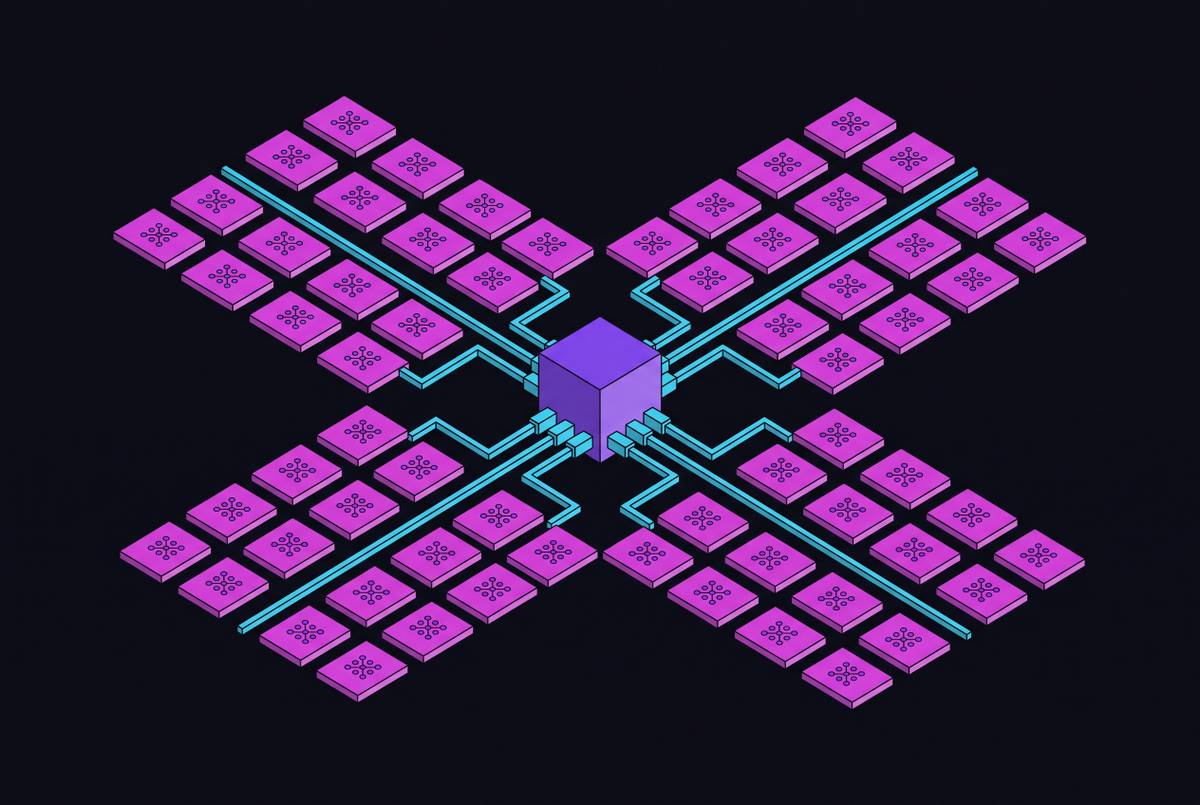
A protocol designed for one generating model can assume a simpler attribution structure than one designed for contributions dispersed across providers. Single-model generation applies the same sampling logic throughout, producing a repeatable statistical tendency across the text. Where watermarking is used, that can include a consistent green-list bias and z-score profile.
When outputs are mixed at the token level, the combined text reflects several token distributions. An individual model’s signal may not clear its detection threshold within that mixture, even though the model contributed to the work. Non-detection can reflect dispersed authorship.
The protocol must preserve that architectural distinction. A record showing how contributions were distributed explains a weak or fragmented signal differently from a record showing that a single model’s output was extensively rewritten. Paraphrasing and post-hoc editing change the text while leaving the generation decisions that preceded it unrecovered.
The ICLR 2025 LIDet research examines the related challenge of detecting whether a model was trained on watermarked output and attributing that training to a source. Its approach requires structured query selection and detection. Although that is a different task from editorial review, it reinforces the need to preserve process evidence. A later detector cannot be expected to reconstruct an attribution process whose records were never maintained.
Turning the handoff from a delivery step into a defined editorial checkpoint
Content teams should make provenance transfer a required input to editorial review. The attribution log should be produced by the pipeline and delivered with the draft. This keeps the checkpoint within the existing workflow. Teams need not abandon pipelines that already produce reliable drafts to make their production history available to editors.
Voice-divergence flagging should occur before the editor receives the text. Automated tone detection should deliver a section-level map of departures from the brand target, while human-judgment routing identifies factual claims, compliance-sensitive passages, and domain-capability mismatches requiring mandatory review. Under the quality-gate design, sections without those concerns can get a lighter review.
The main assumption to reject is the “clean handoff.” A draft that reads well may still have an incomplete attribution record or unresolved compliance questions. Deferring those questions until after editing is not neutral, because the intervening work can remove the signal needed to investigate them. The checkpoint must precede that loss.
AI drafting can reduce first-draft time by roughly a third, with a smaller but real reduction in total time-to-publish. Those gains are durable only when fact-checking, voice reconciliation, and provenance logging are managed systematically, with the editorial work made visible. The operational test is concrete. A successful handoff delivers a recoverable provenance record, a voice-consistency signal, and a human-judgment map without disrupting the pipeline that produced the draft.