Scaling AI Content Production Without Fragmenting Brand Standards
Multi-model orchestration prevents single-model stylistic drift at scale.
Scaling AI content production without fragmenting brand standards requires an architecture that enforces a coherent voice. Properly structured multi-model orchestration can make the brand brief, rather than a model’s default register, govern the result. That is the architectural case. Its technical claims still need proof of their own, including detector benchmarks that show how hard a watermark is to detect and keep that finding separate from claims about brand quality and compliance.
Why scaling AI content production with a single model creates a structural brand consistency problem
A brand can sound subtly wrong without publishing a single obviously bad sentence. Its articles remain accurate, its terminology stays approved, and its drafts pass review, yet a longtime reader notices that it “sounds different now”. The change emerges across the body of work. Editors reviewing individual pieces may see competent prose while missing the cumulative shift toward a generic, tonally flattened register.
That drift has an architectural source because a model’s stylistic preferences recur through its token-probability distributions. When the same engine writes every draft, those preferences shape what the brand publishes again and again. Better prompts can guide the output, but they do not replace the distribution underneath it. The distinction is between correcting an individual draft and controlling the repeated influence that shapes an entire content operation.
Enterprise content practice has consequently moved beyond choosing one flagship model for every task. A representative workflow assigns structure to an initial drafting model, tone and nuance to a second, and factual verification to a third. Each engine has a defined role. That division recognizes that no single model performs all three equally well, but it also raises the central design question of how separate contributions become one recognizable brand voice.
How a single model leaves a repeatable statistical fingerprint in every piece it writes
At each generation step, a language model assigns probabilities across a vocabulary of tens of thousands of tokens. The choices it tends to make shape the text that follows. These patterns can make output statistically fingerprintable, even when the prose contains no conspicuous verbal habit. The mechanism is deeper than a fondness for particular adjectives or sentence openings.
Kirchenbauer et al. introduced KGW watermarking, which illustrates how token preferences can produce a measurable signal. A secret, context-dependent rule partitions the vocabulary into green and red sets, and a bias favors green tokens during generation. Detection reconstructs the partition using the same key. It then compares the observed number of green tokens with the number expected without that bias.
The detector calculates z = (observed green − expected green) / √(T × γ × (1−γ)), where T is the number of scored tokens and γ is the green-list fraction. In plain language, the score measures how far the green-token count departs from expectation relative to normal variation. Length strengthens a sustained signal. With a consistent excess, the z-score grows with the square root of document length, making long-form output more revealing than short passages.
The green-list fraction and logit bias, δ, jointly govern the watermarking tradeoff. A larger bias improves detectability but can degrade generation quality. Beyond explicit watermarks, stylometric fingerprinting research has reported macro F1 scores exceeding 0.95 when distinguishing source models across ChatGPT (GPT-5), Claude 3.5, Gemini, Copilot, Llama 3.1, and Perplexity. That supports the existence of recognizable model patterns while leaving open whether every provider uses KGW. A planted watermark and a stylistic signature are different signals, though both show that fluent prose can carry measurable traces of the model that wrote it.
Why paraphrasing and post-hoc editing cannot fix a token-distribution problem
More editing changes the wording after the generating model has already shaped the draft. That work remains valuable for clarity, accuracy, and tone. It does not, by itself, control the statistical tendencies of the pipeline producing the next hundred pieces.
An empirical evaluation of KGW, Unigram, and SynthID-Text found that every initially detected KGW and Unigram text lost its watermark after paraphrasing across hundreds of valid runs. Replacing tokens can therefore erase a signal that a detector could find. The result does not establish that the replacements preserve brand voice, or that paraphrasing provides reliable editorial governance.
Re-composition goes further because a model reads the draft and writes a new version with new token choices. The original sequence disappears, but the re-composer supplies its own distribution. Deliberate voice choices can disappear with it. A pipeline that repeatedly rewrites through one model may exchange one dominant signature for another while preserving the source of homogenization.
The KGW quality tradeoff reinforces why surface appearance is an incomplete test. A stronger logit bias changes the underlying selection probabilities more aggressively, even if an editor can still make the resulting prose read smoothly. Conversely, readable paraphrases may lose a watermark without becoming more faithful to the brand. Authorship needs to be controlled during generation, with editing retained as a separate editorial function.
How multi-model orchestration disperses the statistical signature that single-model pipelines concentrate
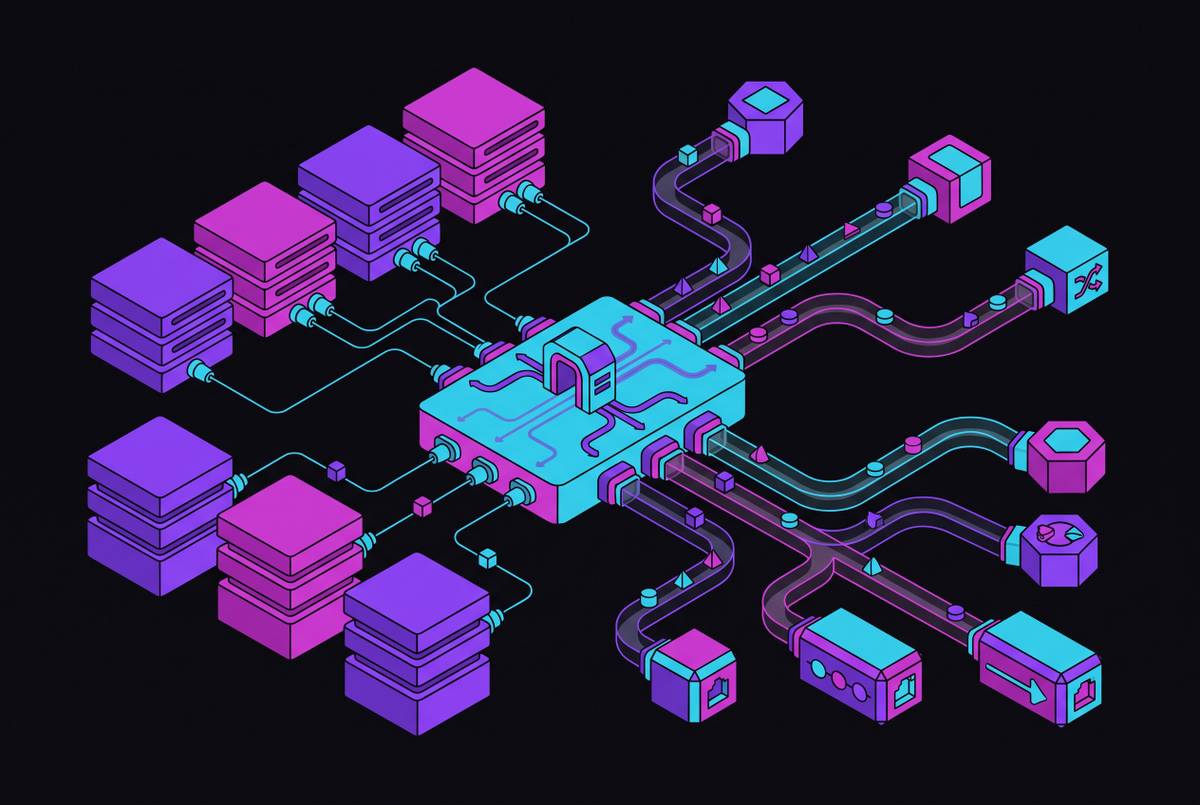
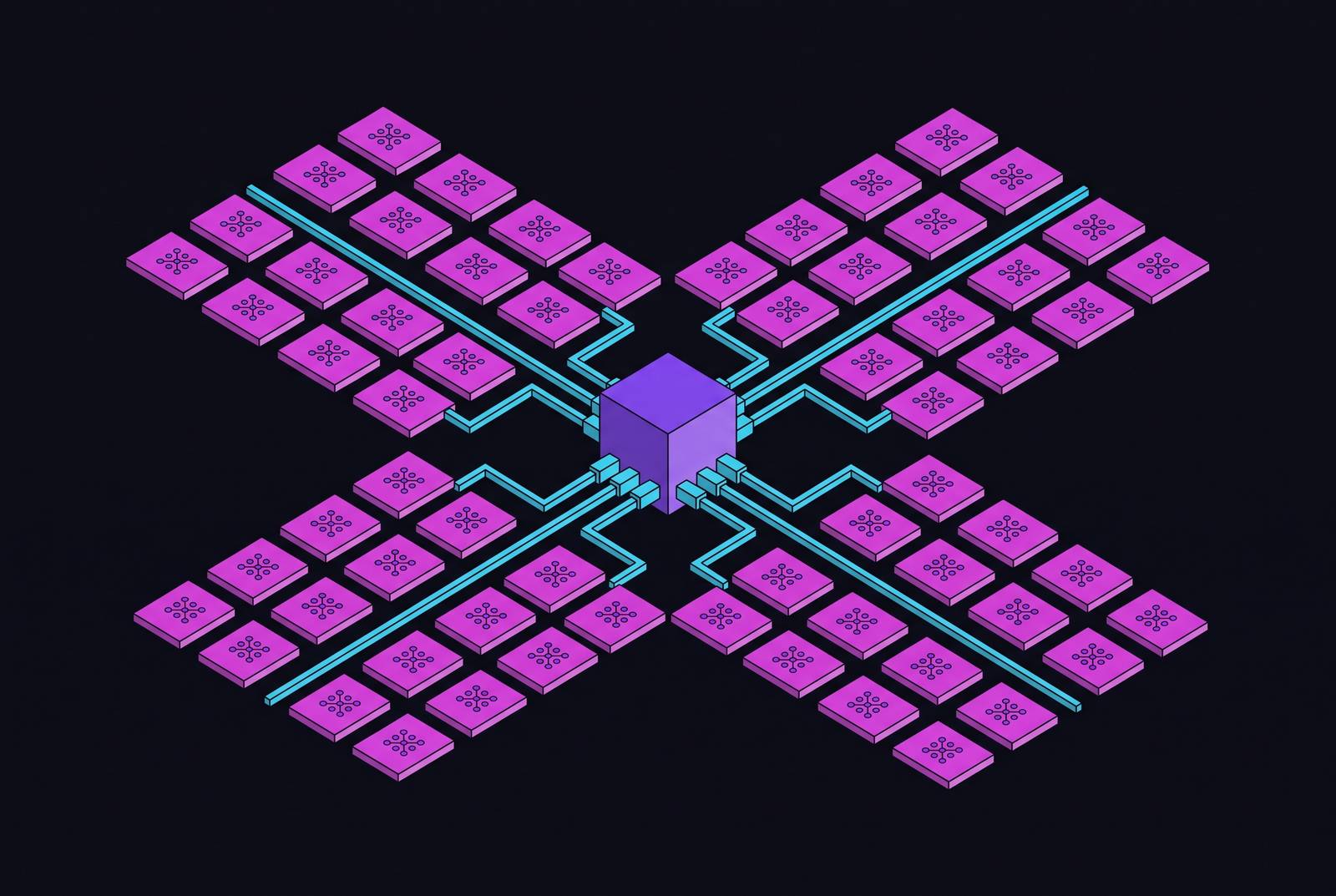
Multi-model orchestration changes which distributions contribute to the final text. In the architecture described here, a dozen model kernels draft in parallel, a judge panel selects the strongest material line by line, and an enhance pass produces a unified register. Selection becomes the point of control. The brief and judging criteria guide which parts are kept, so one model no longer makes every choice.
The resulting sequence draws from multiple sources, so it is no longer simply an uninterrupted sample from one generator. For a KGW detector, the relevant question is whether the assembled text retains a coherent excess under the particular keyed partition being tested. Cross-model selection can weaken that excess, but the result must be measured.
Cross-provider diversity offers a stronger basis for dispersal than two fine-tunes of the same base model. Different base distributions and stylistic priors provide genuinely different candidate material. Where providers use keyed watermarking, different keys and green-list constructions can also separate their signals. This reasoning does not establish which commercial providers implement such schemes, nor does provider diversity alone guarantee an undetectable result.
The brand benefit depends on the same architecture having explicit editorial direction. The judge panel and enhance pass must select and unify the alternatives diversity supplies against the brief, or the pipeline can simply assemble inconsistent fragments. Properly structured, orchestration makes model diversity serve a common standard instead of allowing any one model’s generic register to become the brand’s default.
What enterprise content platforms do to enforce brand standards at the drafting layer, and where they fall short at scale
Enterprise content platforms already apply key brand rules above the generation layer. Their controls include guidance for the brand’s voice, internal knowledge, and checks that run automatically on tone and terminology. These controls have a different job from distributional diversity. They define and apply the standard that a generation architecture must satisfy, whether the underlying engine is singular or orchestrated.
Jasper serves enterprise marketing teams that run complex campaigns, with custom brand voice guidelines and links to internal knowledge bases. Its API and Model Context Protocol connections let teams fit it into their workflows. Writer places enterprise data privacy and brand compliance at the center of its offering. It runs Palmyra models post-trained on the open-weight GLM-5.2 base on its own infrastructure, with guardrails that check drafts for tone, terminology, and legal compliance before a person reviews them.
Copy.ai organizes sales and marketing production through automated, multi-step commercial workflows. Its centralized Infobase holds brand guidelines, value propositions, and positioning documents for use in Chat and Workflows. Context must be referenced to be applied. Teams explicitly tag the relevant entries rather than having every stored guideline automatically injected into every asset.
Grammarly fills another role as a real-time stylistic filter within the existing workspace. It can standardize output across contributors without requiring them to switch contexts, although its final-pass value depends on upstream generation quality. These products address different operational needs. On its own, none of those application-layer functions shows that a generation layer from a single vendor has stopped leaving a repeatable statistical signature. Brand enforcement and generation diversity are therefore complementary controls.
How multi-model generation fits into existing content workflows without requiring teams to rebuild their process
The strongest adoption objection concerns operations. Content teams have put work into clear briefs, approved outlines, drafts they can rely on, and set stages for review. An architectural improvement loses practical value if it requires those processes to be rebuilt. Integrating at the generation call preserves the rest of the content operation.
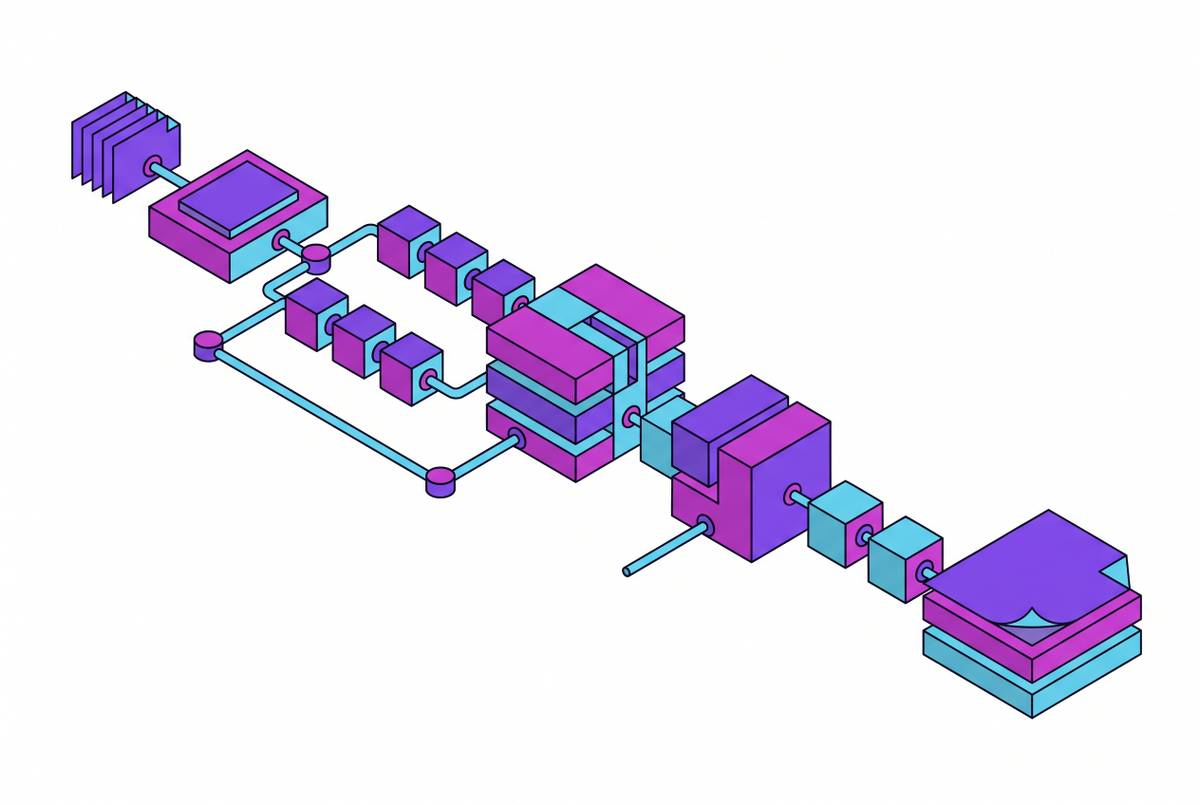
In the proposed workflow, the existing brief becomes the input to parallel drafting. The judge panel selects material line by line, and the enhance pass turns those selections into one coherent draft. The team keeps the same brief format and approval workflow. What changes is how the draft is produced before it reaches the familiar review process.
The same arrangement fits an agentic layer that plans calendars, generates pieces, distributes content, and monitors performance. Orchestration takes place within the generation step, leaving the process for every other task as it is. Its boundary is deliberately narrow. That separation allows the process layer to keep coordinating work while the generation layer controls which models contribute to the text.
The judge panel must weigh more than how well each sentence works on its own, because good lines may not fit together as an article. The enhance pass has the stated role of producing one register from diverse contributions. Diversity of authorship and unity of voice are compatible when selection serves the same brief throughout.
If cross-provider dispersal reliably produces scores below a relevant detector’s threshold, the pipeline need not depend on a separate rewriting stage to reduce that signal. That sets a compliance-by-construction objective whose achievement still requires proof. A low watermark score does not establish legal acceptability or eliminate every form of attribution, so the claimed technical benefit must lead directly to a documented benchmark.
Why z-score benchmarks against real detectors are the right standard for evaluating any watermark removal claim
A KGW removal claim requires testing against an actual KGW detector. A self-reported quality score cannot answer the same question. Neither can an editor’s judgment that the prose sounds natural, because the detector evaluates green-token excess. The measured z-score must fall below the detector’s chosen significance threshold to indicate non-detection.
That standard is precise but bounded. A score below one KGW threshold demonstrates only non-detection in that test. Editors must judge brand coherence in a separate review, while broader provenance claims need evidence from more than one detector. Keeping these outcomes separate makes the architectural argument more credible because each claim has an appropriate test.
The EMNLP 2025 paper on a watermarking method provides a useful model for evaluation breadth. It assessed six watermarking baselines, four tasks, five LLMs, and eight adversarial attack types. A narrow success is not a general solution. Comparable breadth is necessary when a removal architecture claims to work across different watermark constructions and generation conditions.
Baseline behavior is equally important to interpretation. A 2026 study of watermark detection found a KGW false-negative rate of 70% before any removal attempt. An undetected output alone therefore cannot establish that orchestration caused the result. The practical standard is a documented movement from deep in the detection zone to below the threshold, with a count of tokens rewritten through cross-provider dispersal and an honest account of the detector’s starting performance.
That evidence gives content teams something reproducible to bring into a compliance conversation without confusing non-detection with permission or complete untraceability. It also establishes the proper burden for vendors claiming an architectural solution. The labs have shipped watermarking tools built with care, and the response deserves the same level of technical care. Content teams need measured results against real detectors.