Preserving Editorial Review Stages in AI-Augmented Workflows
Discrete review gates protect editorial judgment as AI accelerates drafting.

AI-augmented editorial workflows need to preserve judgment while accelerating publication. As drafting time approaches zero, discrete review stages keep decisions about purpose, accuracy, voice, and release embedded in the process. Generation architecture can address risks that prose review cannot see, but it does not replace accountable editorial gates.
Why AI drafting speed shifts the editorial bottleneck rather than eliminating it
An editor receives an AI draft in seconds. It reads well, follows the outline, and looks ready to approve. The immediate temptation is to approve it almost as quickly, particularly when the next draft is already available. Yet the speed of delivery says nothing about whether the topic deserved coverage, the claims are supported, or the piece expresses the intended position. Those decisions still require editorial judgment.
Teams choose topics and write briefs before generation, then check voice and compliance and decide where the piece should go. Faster drafting concentrates the remaining work around those decisions, so treating it only as a productivity gain obscures the change in workflow. The pressure now comes from both drafting and deadlines, pushing toward compressed review. Preserving separate gates gives each decision a defined place that drafting speed cannot silently displace.
How single-model AI pipelines introduce a structural compliance risk that editorial review alone cannot catch
Statistical watermarking exposes the limits of that judgment. An editor can assess what a draft says without being able to identify how its token choices were shaped during generation. In a watermarked single-model pipeline, a statistical pattern may remain present in prose that is accurate, polished, and consistent with the brief. It is not a visible drafting defect. A review process that treats readable text as sufficient evidence of acceptable provenance therefore asks editors to make a determination their reading cannot support.
KGW-family watermarking illustrates the mechanism. At each decoding step, a hash of recent context divides the vocabulary into green and red lists, and a fixed bias increases the likelihood of green tokens. Detection then uses a z-test to check whether the green-token count is higher than chance would produce. A high z-score signals watermark presence. The signature exists in the distribution of token choices.
Saifur Rahman Tamim and Amir Labib Khan’s AI Watermark Evidence Fails Forensic Readiness: An Empirical Evaluation reported a 70% false-negative rate for KGW before any attack in its evaluation. That result limits what a negative detector finding can establish, even before editorial changes complicate the evidence. It does not show that every single-model draft has an intentional watermark, or that the same error rate holds wherever the system is used. The narrower conclusion is sufficient for workflow design. Prose quality cannot establish provenance, and detection results cannot substitute for a record of generation.
Why watermark removal through paraphrasing or editing is not a reliable compliance strategy
The obvious objection is that paraphrasing can remove detectable watermarks, making a rewrite appear to solve the problem. The forensic evaluation found that, across hundreds of paraphrase runs on KGW- and Unigram-watermarked texts, 100% of initially detected watermarks were no longer detected after paraphrasing. Because the detectors already missed watermarked text before intervention, the result demonstrates the fragility of the evidence rather than the reliability of rewriting as a compliance control.
A negative result may mean that editing weakened a detectable pattern or that the detector failed to identify a pattern that was present. The wider compliance problem includes both missed watermarks and clean content being flagged, although the reported false-negative finding does not quantify the latter. Editorial rewriting cannot resolve that uncertainty by making the text sound more original.
Tsinghua University research on watermark radioactivity found that targeted paraphrasing and watermark neutralization could eliminate inherited watermarks across multiple model pairs and watermarking schemes while preserving underlying knowledge transfer. This separates the signal from the capability. Removing one does not erase the history represented by the other, so an absent watermark is not a reconstructed provenance chain. The architectural response is to control and record how content is generated rather than trying to establish compliance through changes to the final prose.
What genuine multi-model generation does that single-model drafting with editing cannot
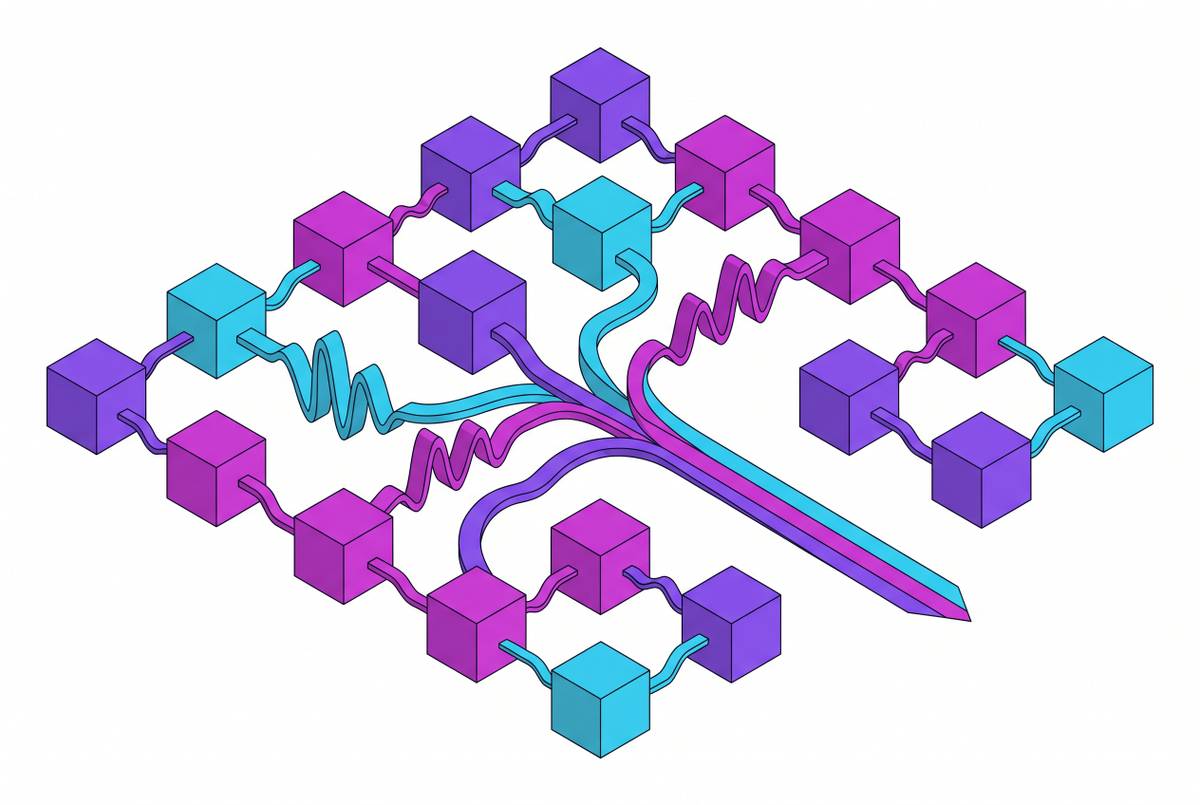
Genuine multi-model generation changes the origin of token choices. In the architecture described here, models from different providers contribute selections interleaved at the token level. Each model makes choices shaped by its own training distribution, so the full output draws on more than one model. This is a different intervention from post-hoc editing. It aims to disperse the statistical pattern during generation instead of weakening an already established pattern afterward.
The proposed watermarking benefit follows from that dispersion. When no single green-list and red-list partition dominates the output, the architecture aims to keep the corresponding z-score below the detection threshold. The mechanism’s effectiveness requires quantitative benchmarks against real KGW detectors. A lower detection score also remains distinct from compliance with provenance or disclosure requirements.
Paraphrasing does not provide the same distributed authorship. A single paraphrase model uses its own distribution for the rewrite, while genuine interleaving draws token choices from different sources as the draft takes shape. The distinction also excludes simply choosing a different model for each article. That approach varies the source across a publication but does not distribute generation within an individual draft.
A judge panel can select the best output line by line, and a final enhance pass can unify register. This allows a coherent editorial voice to coexist with contributions from different models. But the prose still needs to be checked against the intended voice, and claims about its statistical behavior need to be measured. Architectural diversity changes the raw material and the mechanism of generation. It does not make either editorial approval or documented provenance unnecessary.
How discrete editorial review stages remain meaningful inside a multi-model pipeline
With generation controls assigned to the architecture, editors can focus on decisions their expertise can resolve. The useful contrast is between a workflow that preserves separate gates and one that compresses them into a single approval. In the former, purpose, voice, factual support, and release requirements receive distinct checks. In the latter, a favorable impression of the draft can stand in for all of them.
The brief gate protects the decision to speak. Before generation, a human editor establishes the topic, angle, voice parameters, and compliance requirements rather than leaving the model to infer them. The editor determines what the organization intends to say and what the draft must support. That decision gives later review a stable reference. Without it, an editor may rely on how convincing a draft seems to judge its fitness for an unapproved purpose.
The voice-check gate keeps the voice consistent across the publication. Multi-model routing can produce competent prose that drifts toward a generic register during long generations, and reviewing assets individually can obscure the accumulating change. The editor therefore assesses the draft against the versioned brand configuration. Factual review separately tests claims against their sources. Fluent wording cannot compensate for unsupported content, just as accurate claims do not establish voice fidelity.
The compliance gate protects the release decision. Before a piece goes out, it checks provenance metadata and required disclosures against policy, with no detector result taken as permission to publish. Each gate applies a defined checklist and produces a record of its decision. These boundaries keep a pass on one check from quietly counting as a pass on another. The editor is no longer being asked to “look over” a draft, but to make specific, accountable judgments within the workflow.
How regulatory and provenance requirements are hardening the case for embedded review gates
Policy is moving from voluntary disclosure toward more formal provenance infrastructure, increasing the importance of knowing who generated an output, what prompted it, and who approved its release. The decision chain must be reconstructible where trust, safety, rights, or regulated communications are involved. But the policy ground can shift. The forensic readiness evaluation notes that executive orders in this space have been rescinded, so the direction of travel should not be confused with a uniform level of current enforcement.
The C2PA standard provides a concrete model for provenance records. Developed by Adobe, Arm, BBC, Intel, Microsoft, Truepic, and others, it uses a cryptographically signed manifest that travels with a file and records its provenance chain. That chain can include which tools and models were used, the steps that changed the content, and who approved the changes. Parties can verify the manifest without a central database.
C2PA Specification v2.3, released in December 2025, extended provenance support to unstructured text files, enabling applications such as LLM outputs. That extension brings content credentialing into the text workflows editorial teams operate. Generation, transformation, and authorization are also the events a preserved editorial workflow needs to document. Review gates provide defined points at which those records can be assessed before an asset proceeds.
The standard provides a way to represent provenance, while policy determines which disclosures and approvals a release requires. At volume, that distinction favors embedded logging over manual reconstruction after publication. A workflow that logs decisions at each gate can show how those decisions were made. A workflow reduced to an undocumented final approval cannot provide the same account merely because an editor remembers reading the draft.
What a preserved editorial workflow looks like in practice when AI handles drafting and compliance is structural
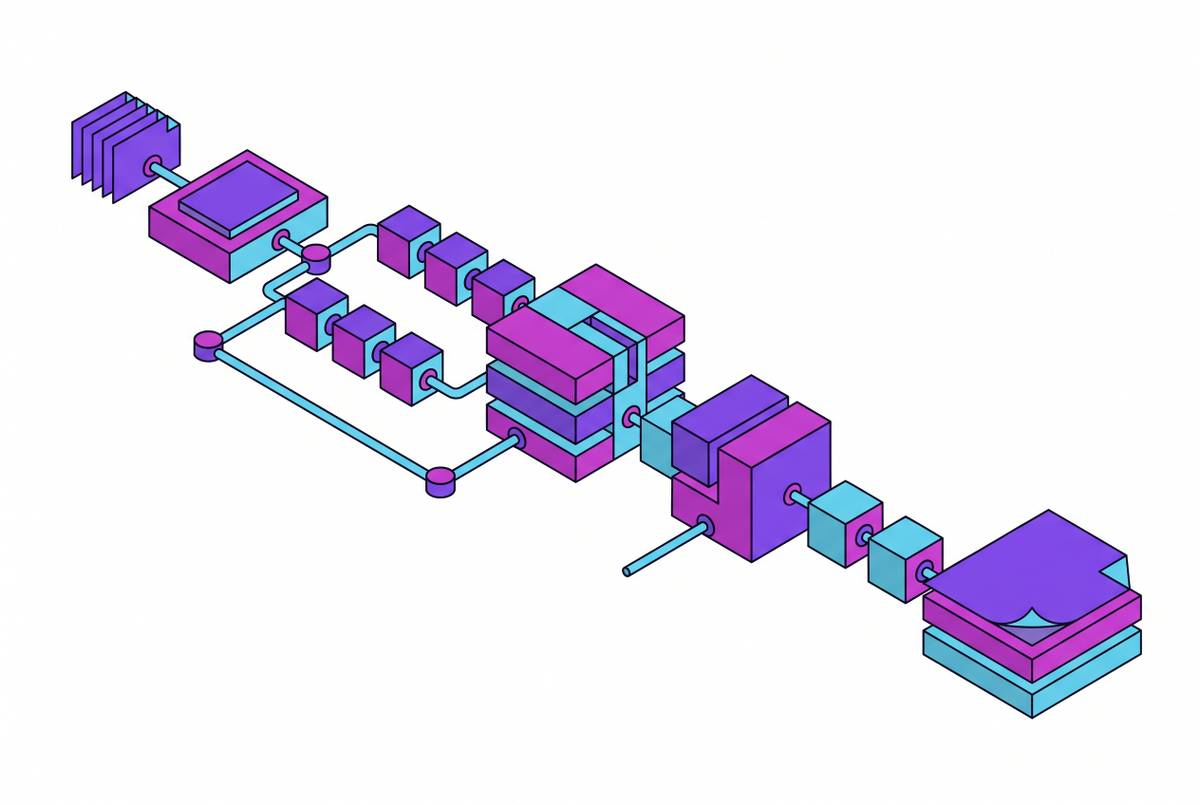
A practical workflow separates human-owned strategy and briefing, architecturally diverse AI generation, and human-owned review and compliance. These layers have different responsibilities. The strategy layer decides what the organization will say, the generation layer produces material within that brief, and the review layer assesses the result’s fitness for release. Drafting speed must not dissolve those boundaries. Otherwise, an available draft can become a substitute for an approved editorial intention.
For teams adapting this model, the brief gate is the essential starting point. Topic, angle, voice parameters, and compliance requirements are settled before generation begins. An approved outline then gives the drafting process a defined direction rather than asking it to supply organizational intent. The model cannot know what the organization has decided to say unless that decision is supplied. A human still needs to approve the brief even when writing the prose that follows takes almost no time.
The generation layer can then use model diversity within that boundary. Different models perform differently by task, length, and register, so routing at the kernel level rather than selecting one model per article can provide varied raw material for the judge pass. The final enhance pass addresses consistency of register. Claims about watermark behavior still require detector benchmarks, while provenance recording belongs within generation and transformation. Review should confirm that those records exist.
Voice fidelity is assessed against the versioned brand configuration, factual accuracy against sourced claims, and provenance metadata against the requirements for compliance logging and disclosure. Each decision produces a log entry. Compliance must be built into the process before the editor reaches the release gate so that the generation history is recorded for review alongside the final draft.
Teams with clear briefs, approved outlines, and reliable AI drafts need not discard those working processes. The adaptation is to add structural diversity where generation occurs and make each existing gate produce a record of its decision. The result preserves the value of established editorial practice while assigning statistical testing and provenance recording to controls suited to those tasks. These stages allow drafting speed to become publishing capacity while preserving the judgment that makes content trustworthy.